

10 Essential Contract Management Best Practices for 2025

Tired of nonsense pricing of DocuSign?
Start taking digital signatures with BoloSign and save money.
Contracts are the lifeblood of business, but managing them often feels like navigating a maze of paperwork, endless email chains, and compliance risks. From creation to renewal, a single misstep can lead to missed opportunities, costly errors, and legal headaches. This is especially true for dynamic businesses in sectors like staffing, healthcare, real estate, and logistics, where speed and accuracy are non-negotiable. So, how do you transform this complex process into a streamlined, secure, and strategic advantage?
We’ve compiled 10 essential contract management best practices to help you master your agreements, reduce cycle times, and unlock new levels of efficiency. These aren't just abstract theories; they're actionable strategies you can implement to gain control, ensure compliance, and drive growth. Whether you're sending out service agreements in professional services, managing vendor contracts in logistics, or handling patient consent forms in healthcare, these insights will pave the way for a smarter contracting future.
Many of these practices are amplified by tools that simplify the entire workflow. For instance, using a platform for digital signing solutions allows you to create, send, and manage legally binding documents from one central hub. With BoloSign, businesses can create, send, and sign PDFs online, or even use templates and forms, all within a secure, AI-powered environment. This guide will show you how to build a robust framework for every stage, from initial drafting and negotiation to secure storage and renewal management. By adopting these strategies, you can minimize risk, improve collaboration, and turn your contracts into valuable business assets. Ready to get started? Let’s dive in.

1. Adopt a Centralized Contract Lifecycle Management (CLM) System
The foundation of modern contract management is a unified digital platform. Disorganized spreadsheets, scattered email threads, and physical filing cabinets create bottlenecks, increase risk, and obscure valuable business insights. A Contract Lifecycle Management (CLM) system centralizes every stage of your contracting process, from initial drafting and negotiation to execution, compliance monitoring, and renewal.
This approach transforms contracts from static documents into dynamic, data-rich assets. By creating a single source of truth, teams across legal, sales, finance, and procurement gain complete visibility into their obligations, deadlines, and performance metrics. This unified view is a cornerstone of effective contract management best practices, as it dramatically reduces administrative overhead, minimizes human error, and accelerates deal cycles. For example, a staffing agency can track hundreds of client and contractor agreements from a single dashboard, ensuring compliance and timely renewals without manual effort.
Why It Works and How to Implement It
A CLM system works by automating manual tasks and standardizing workflows. For instance, instead of manually tracking renewal dates, the system sends automated alerts to stakeholders. Instead of emailing drafts back and forth, teams can collaborate and redline within the platform, preserving a complete audit trail.
To successfully adopt a CLM:
- Start with a Pilot: Test the system with a single department or contract type to identify challenges and refine processes before a company-wide rollout.
- Define Clear Workflows: Map out your approval processes, identifying key stakeholders and timelines. Codify these into automated approval matrices within the system.
- Invest in Training: Ensure all users understand the platform’s features and their roles within the new digital workflow. Comprehensive training drives adoption and maximizes ROI.
- Integrate Key Systems: Connect your CLM with CRM, ERP, and procurement software. This creates a seamless flow of data, allowing sales teams in a professional services firm to generate contracts from deal data without leaving their primary application.
By centralizing control and automating routine steps, you turn contracts from a reactive administrative burden into a proactive strategic tool. For more information on streamlining your agreement processes, you can learn more about digital contracts and signatures.
2. Standardized Contract Templates and Playbooks
Starting every contract from scratch is inefficient and invites unnecessary risk. By establishing standardized, pre-approved templates and clause libraries, organizations can ensure consistency, accelerate negotiation cycles, and embed compliance directly into their agreements. A contract playbook serves as a guide for your team, outlining standard positions on key terms and providing pre-approved alternative language for common negotiation points.
This strategy shifts contract creation from an ad-hoc, reactive task to a controlled, proactive process. Instead of legal teams reviewing every minor detail, business users can confidently generate compliant agreements for routine transactions, such as standard NDAs or sales orders. This focus on standardization is a core component of effective contract management best practices because it significantly reduces legal review time, minimizes exposure to unfavorable terms, and empowers commercial teams to close deals faster.
Why It Works and How to Implement It
Standardized templates work by creating a reliable, vetted foundation for every agreement. This consistency simplifies review, streamlines approvals, and makes it easier to manage obligations post-signature since similar contracts contain the same core terms. A playbook provides the necessary guidance for when and how to deviate from those standard terms, maintaining control while allowing for commercial flexibility.
To successfully implement this practice:
- Establish a Cross-Functional Team: Involve stakeholders from legal, sales, procurement, and finance to develop templates that are both legally sound and commercially practical.
- Create a Clause Library: Build a repository of pre-approved clauses for common scenarios like indemnification, liability, and data privacy. This allows for modular, "drag-and-drop" contract assembly.
- Develop a Contract Playbook: Document the rationale behind key clauses and provide clear, tiered negotiation positions (e.g., "preferred," "acceptable alternative," "must escalate").
- Integrate with Your Signing Tool: Store your approved templates directly within your eSignature platform. For instance, BoloSign allows you to create and save unlimited templates at one fixed price, ensuring your team always uses the most current, compliant version for creating digital contracts.
By systemizing your foundational legal language, you reduce friction in the deal cycle and transform your contracts into predictable, manageable assets. This allows legal resources to focus on high-value, strategic negotiations rather than routine administrative work.
3. Automated Contract Analysis and Risk Scoring
Manual contract review is time-consuming, expensive, and prone to human error, especially when dealing with high volumes. By leveraging AI-powered technologies, you can automate the analysis of contract content, extract key terms, and assign risk scores to flag potential issues for human attention. This approach enables rapid review cycles and empowers legal teams to focus on high-value strategic tasks rather than painstaking manual checks.
This technology transforms contract review from a subjective process into a data-driven one. AI tools can instantly scan agreements for non-standard clauses, missing provisions, or terms that deviate from your pre-approved legal playbooks. This makes it one of the most impactful contract management best practices for regulated industries or companies managing thousands of third-party agreements, ensuring consistency and mitigating hidden liabilities.

Why It Works and How to Implement It
AI-driven analysis works by using machine learning and natural language processing (NLP) to understand contractual language. It can identify and extract critical data points like renewal dates, liability caps, and indemnification clauses, comparing them against established standards. For example, a global logistics company can use AI to analyze incoming vendor contracts and automatically flag any limitation of liability clause that exceeds its approved financial threshold.
To successfully implement automated analysis:
- Define Clear Risk Criteria: Work with legal and business stakeholders to establish what constitutes a high, medium, or low-risk clause. Codify these rules into the AI platform's scoring system.
- Start with One Contract Type: Begin with a focused pilot, such as Non-Disclosure Agreements (NDAs) or Master Service Agreements (MSAs), to refine the AI model before expanding its use.
- Establish a Human-in-the-Loop Workflow: Use AI to handle the initial review and flag issues, but always route high-risk or heavily negotiated contracts to an experienced legal professional for final validation.
- Train Teams on Interpretation: Ensure users understand how to interpret the AI-generated risk scores and insights, turning the data into actionable decisions during negotiations.
Automating the initial review process provides a powerful first line of defense, catching risks early and standardizing your approach to compliance. For more details on maintaining secure workflows, you can explore the importance of audit trails and document security.
4. Contract Obligation and Renewal Management
Once a contract is signed, the real work begins. Failing to track key obligations, milestones, and renewal dates creates significant financial and operational risks. Effective contract obligation and renewal management involves systematically identifying, tracking, and acting upon every commitment and deadline embedded within your agreements, ensuring nothing falls through the cracks.
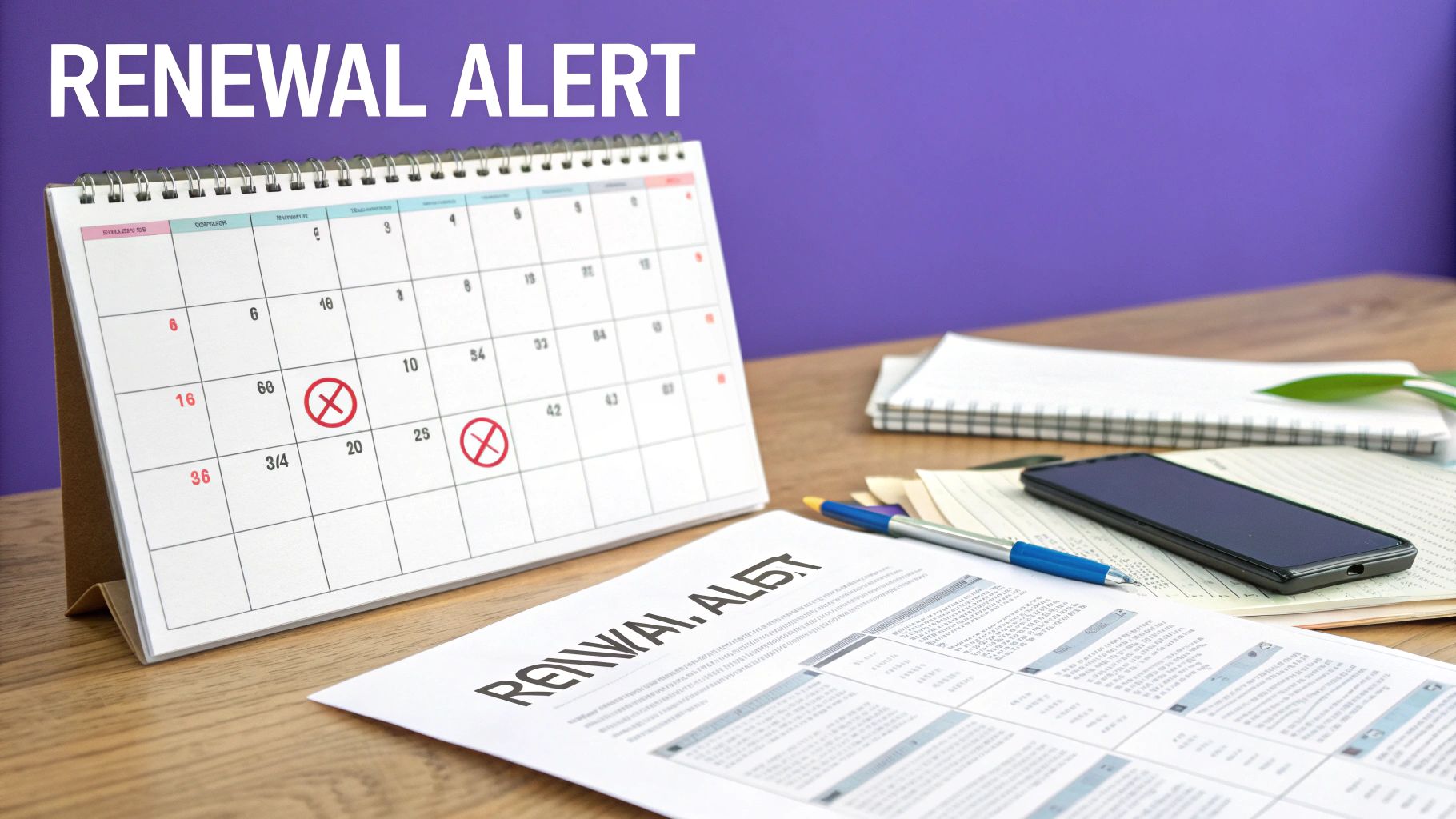
This proactive approach prevents unwanted auto-renewals, ensures timely payments, and guarantees compliance with all contractual terms, such as vendor insurance requirements or service-level agreements. Establishing this discipline is a core pillar of contract management best practices, transforming static agreements into a predictable operational framework. For example, a real estate firm can manage hundreds of lease renewal dates across its portfolio, while an education institution can track thousands of software licenses to avoid overspending.
Why It Works and How to Implement It
This practice works by creating a clear line of sight into future contractual events, allowing teams to prepare, negotiate, and budget effectively. Instead of reacting to a surprise invoice for an auto-renewed service, you are positioned to evaluate the contract's value and negotiate from a position of strength well in advance.
To successfully implement obligation and renewal management:
- Establish a Renewal Calendar: Centralize all key dates (renewals, expirations, price reviews) into a single, accessible calendar, ideally within your CLM. Set automated reminders for 90, 60, and 30 days out.
- Assign Clear Ownership: For each contract, assign a specific individual or team responsible for managing its lifecycle and making renewal decisions.
- Automate Notifications: Use your management system to automatically alert stakeholders of upcoming deadlines. This ensures key personnel in procurement, legal, and finance are aligned.
- Conduct Portfolio Reviews: Schedule quarterly or annual reviews to assess the performance, cost, and strategic value of your entire contract portfolio, identifying opportunities for consolidation or renegotiation.
5. Establish Cross-Functional Contract Governance Committees
Effective contract management extends beyond the legal department; it requires strategic alignment across the entire organization. Siloed decision-making leads to conflicting terms, missed opportunities, and increased risk. A cross-functional contract governance committee brings together representatives from legal, finance, procurement, and key business units to create a unified oversight body.
This collaborative approach ensures that contracts not only meet legal standards but also align with financial goals, operational capabilities, and broader strategic objectives. By establishing a formal governance structure, you institutionalize one of the most crucial contract management best practices: ensuring all high-value or high-risk agreements receive comprehensive, multi-disciplinary review before execution. This prevents costly oversights and makes certain that every contract serves the company's best interests.
Why It Works and How to Implement It
A governance committee works by creating a standardized forum for evaluating significant contracts, setting policies, and resolving disputes. Instead of ad-hoc reviews that vary by department, this body provides a consistent, data-driven process. For example, a healthcare system’s vendor management board would review all major equipment and service agreements to assess not just legal terms but also patient safety risks, financial impact, and integration with existing clinical systems.
To successfully establish a governance committee:
- Define Authority Clearly: Create a decision matrix that specifies which contract types and values require committee approval. This prevents bottlenecks for routine, low-risk agreements.
- Set a Regular Cadence: Schedule monthly or quarterly meetings to maintain momentum and ensure timely reviews. Require all materials to be submitted well in advance.
- Track Key Metrics: Use data to guide decisions. Monitor metrics like approval cycle times, non-standard clause exceptions, and vendor performance to identify trends and areas for improvement.
- Document Everything: Maintain meticulous records of all decisions, discussions, and rationale. This creates an invaluable audit trail and provides clarity for future contract negotiations.
By centralizing high-level oversight, you build a culture of shared responsibility and strategic alignment. A key part of this is streamlining the review process itself. You can learn more about creating automated approval workflow systems to support your committee's efficiency.
6. Key Contract Metrics and Performance Dashboards
What isn't measured can't be improved. Relying on gut feelings to assess contract efficiency is a recipe for missed opportunities and hidden risks. A data-driven approach, centered on key performance indicators (KPIs) and visual dashboards, transforms contract management from a subjective art into a quantifiable science. This practice involves systematically tracking metrics to gain clear insights into portfolio health, process bottlenecks, and overall business impact.
This method moves teams beyond simple execution and into strategic analysis. By monitoring metrics like contract cycle time, deviation from standard terms, and obligation fulfillment rates, organizations can pinpoint inefficiencies and make informed decisions. This analytical rigor is a cornerstone of advanced contract management best practices, enabling teams to prove their value, mitigate risks proactively, and align contract outcomes with strategic business goals.
Why It Works and How to Implement It
Tracking metrics works because it provides an objective, real-time view of performance, replacing anecdotal evidence with hard data. For instance, a high cycle time for sales agreements in a professional services firm might reveal a bottleneck in the legal review stage, prompting a process redesign. Similarly, tracking supplier performance against contractual SLAs helps procurement teams in logistics manage relationships and enforce accountability effectively.
To successfully implement performance dashboards:
- Start Small: Begin with 5-7 core metrics that align directly with your most critical business objectives. Avoid metric overload, which can cause confusion and inaction.
- Establish Ownership: Assign a clear owner to each metric who is responsible for tracking, reporting, and driving improvement initiatives.
- Set Realistic Benchmarks: Analyze historical data or industry standards to set achievable targets. These benchmarks provide context and motivate performance.
- Review and Act Regularly: Schedule monthly or quarterly meetings with key stakeholders to review the dashboards, discuss trends, and define action plans. Use these insights to identify training needs or process gaps.
By turning contract data into actionable intelligence, you can optimize your entire contract lifecycle, reduce costs, and strengthen compliance. For a closer look at how automation can simplify data collection and reporting, explore our AI-powered document workflows.
7. Vendor Management and Strategic Partnering Frameworks
Not all supplier contracts carry the same weight or risk. Treating a high-volume office supply vendor with the same strategic oversight as a critical technology partner is inefficient and exposes your business to unnecessary risk. A structured vendor management framework allows you to categorize suppliers based on their strategic importance, value, and risk profile, ensuring you apply the right level of management and collaboration.
This approach moves beyond transactional relationships to build true strategic partnerships where it matters most. By segmenting vendors into tiers (e.g., Strategic, Preferred, Transactional), you can dedicate resources more effectively, mitigate supply chain disruptions, and unlock collaborative innovation. This tiered system is a core component of effective contract management best practices, transforming vendor relationships from a simple cost center into a powerful source of competitive advantage.
Why It Works and How to Implement It
A strategic partnering framework works by aligning your vendor management efforts with your overall business objectives. Instead of a one-size-fits-all approach, you develop customized engagement strategies for each vendor tier. For instance, a staffing firm's strategic partners for high-demand skills may engage in joint business planning, while transactional vendors are managed primarily on cost and efficiency.
To successfully implement this framework:
- Establish Clear Segmentation Criteria: Define the factors that determine a vendor’s tier, such as spend volume, strategic importance, risk level, and potential for innovation.
- Develop Tier-Specific Engagement Models: Create distinct management plans for each tier. Strategic partners might get quarterly business reviews and executive sponsors, while others are managed through automated performance scorecards.
- Use Performance Scorecards: Track and measure vendor performance using 5-8 key metrics that are relevant to their tier. These metrics should cover quality, delivery, cost, and responsiveness.
- Communicate Transparently: Inform vendors of their tier status and the criteria for moving between tiers. This clarity fosters trust and incentivizes performance improvements.
By structuring your vendor relationships, you ensure that your most critical partnerships receive the attention they deserve. For guidance on structuring the agreements that underpin these relationships, you can explore more about business contracts.
8. Implement Robust Risk Management and Compliance Frameworks
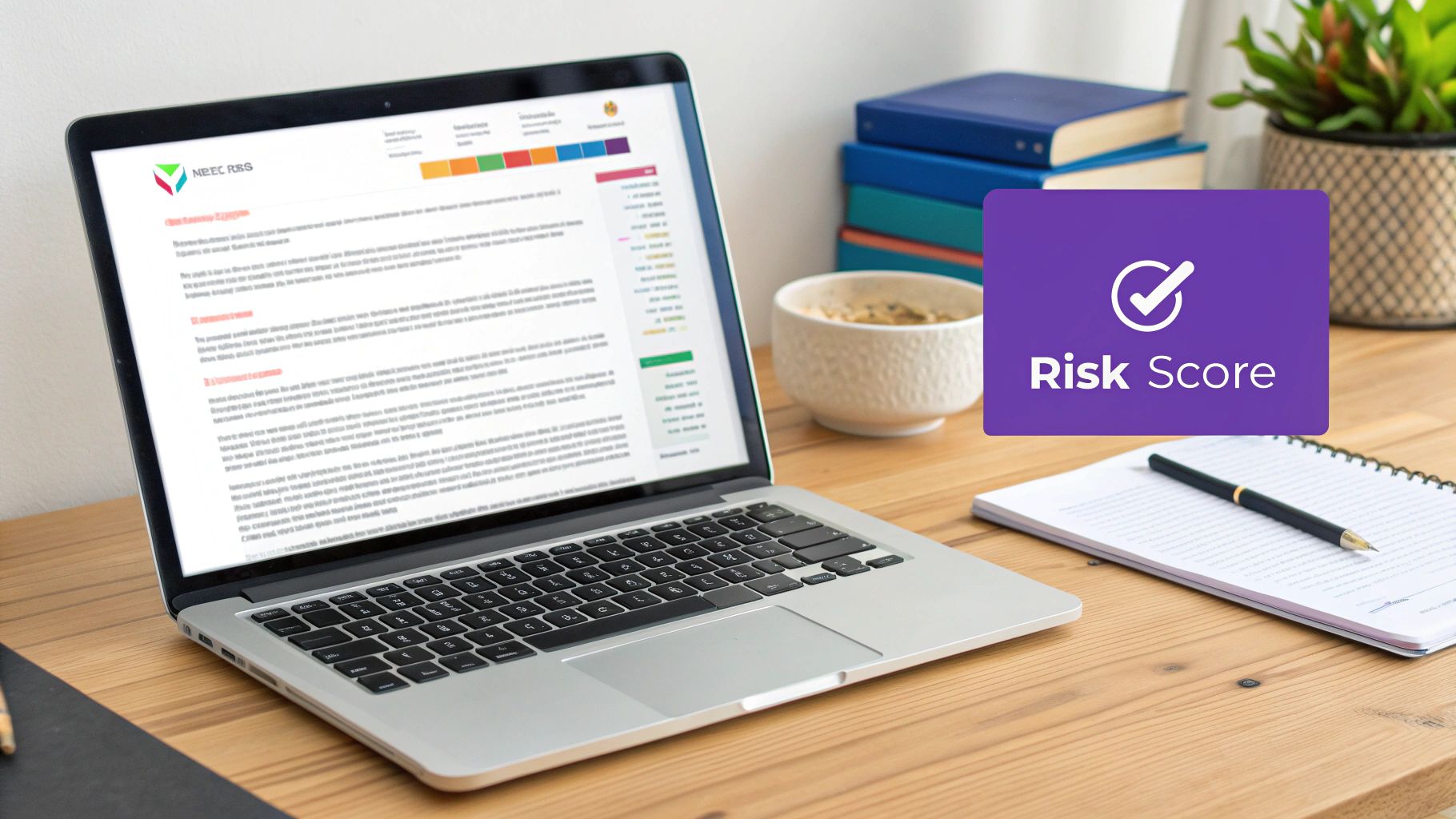
Beyond execution and storage, proactive contract management involves systematically identifying, assessing, and mitigating potential risks. A formal risk and compliance framework transforms your contract portfolio from a potential liability into a governed asset. This involves creating documented processes to manage legal, financial, operational, and regulatory risks, ensuring every agreement aligns with your organization's risk appetite and compliance mandates.
This structured approach is a critical component of advanced contract management best practices, as it prevents costly penalties, reputational damage, and operational disruptions. For instance, a healthcare provider must ensure all vendor contracts are HIPAA compliant, while a real estate firm in the UAE needs to adhere to local property laws. A dedicated framework ensures these requirements are not an afterthought but are built into the contract lifecycle from the very beginning.
Why It Works and How to Implement It
A risk management framework works by making risk identification and compliance a shared, measurable responsibility rather than a siloed legal function. It establishes clear protocols for what to do when risks are identified, who is responsible for mitigating them, and how to track compliance over time. This creates a defensible audit trail and fosters a culture of accountability.
To successfully implement this framework:
- Develop a Risk Assessment Matrix: Create a matrix to classify contracts based on risk level (e.g., high, medium, low) using factors like contract value, regulatory impact, and operational dependency. High-risk contracts should trigger more stringent review and approval workflows.
- Embed Compliance into Templates: Build standard compliance clauses and controls directly into your contract templates. This ensures that baseline requirements, like data privacy provisions (GDPR) or industry-specific regulations (HIPAA), are included by default.
- Establish Clear Escalation Paths: Define and document who needs to be notified when a specific risk or compliance issue is identified. This prevents delays and ensures the right experts are involved in a timely manner.
- Conduct Regular Audits: Schedule periodic reviews of your contract portfolio to audit for compliance, identify emerging risks, and ensure the framework remains effective.
By systematically managing risk, you protect your organization from unforeseen liabilities and strengthen stakeholder confidence. To effectively embed a comprehensive risk and compliance framework, consider this guide on a modern compliance risk management framework for detailed strategies.
9. Establish a Contract Data and Information Architecture Strategy
Effective contract management goes beyond storing documents; it involves strategically organizing the data within them. A contract data and information architecture strategy is a comprehensive plan for structuring, managing, and governing all contract-related information. This approach treats contract data as a critical business asset, ensuring it is accessible, accurate, and usable for analytics and decision-making.
By defining data schemas, metadata standards, and governance policies, you create a structured environment where contract information can be easily found and leveraged. This structured approach is a cornerstone of advanced contract management best practices, as it unlocks insights into risk exposure, financial obligations, and performance trends that are otherwise hidden in dense legal text. It allows teams to move from simply managing documents to managing relationships and commitments.
Why It Works and How to Implement It
A strong data architecture works by creating a standardized language for your contracts. Instead of having renewal dates in ten different formats, you have one consistent field. Instead of searching by vague keywords, you use precise metadata tags. This consistency makes data aggregation, reporting, and automation reliable and scalable. Large financial institutions in the US and Canada use master data management to ensure consistency across all client agreements, dramatically reducing compliance risks.
To successfully implement a data and information architecture strategy:
- Conduct a Data Audit: Begin by analyzing your existing contracts to understand what data you have, where it is stored, and how it is structured.
- Define Governance Policies: Create clear rules for data ownership, access controls, and quality standards. Establish who is responsible for maintaining the accuracy of key contract data points.
- Create Standardized Taxonomies: Develop a controlled vocabulary and data dictionary for key terms, clauses, and metadata fields. This ensures everyone is tagging and classifying contracts consistently.
- Implement Data Quality Checkpoints: Integrate validation rules into your contract creation and intake processes to prevent inaccurate or incomplete data from entering your system.
By organizing your contract data with intention, you build a powerful foundation for analytics, compliance, and strategic forecasting, turning your contract portfolio into a source of competitive intelligence.
10. Foster Deep Collaboration Between Legal and Procurement Teams
Contracts are not created in a vacuum; they are the result of a partnership between legal expertise and commercial acumen. Silos between legal and procurement teams are a common source of friction, leading to delayed negotiations, unfavorable terms, and increased risk. A strategic alliance between these two functions transforms contract management from a series of handoffs into a unified, proactive process.
This collaborative approach ensures that legal requirements are commercially viable and that procurement goals are legally sound. By aligning incentives, sharing knowledge, and establishing joint governance, organizations can accelerate deal cycles and create more resilient, valuable agreements. This synergy is a critical component of contract management best practices, as it embeds risk mitigation and value creation directly into the procurement workflow.
Why It Works and How to Implement It
This partnership works by breaking down communication barriers and creating a shared sense of ownership over contract outcomes. When legal understands procurement's sourcing strategy and procurement understands key contractual risks, the entire process becomes more efficient. For instance, a large logistics firm might hold joint training sessions to ensure procurement teams understand the implications of liability clauses in carrier agreements.
To successfully build this alliance:
- Establish Joint Governance: Create a committee with leaders from both teams to make joint decisions on templates, playbooks, and escalation paths.
- Create Shared Metrics: Develop KPIs that require both teams to succeed, such as "average contract negotiation cycle time" or "percentage of contracts with pre-approved clauses."
- Schedule Regular Forums: Hold weekly or bi-weekly meetings to review the contract pipeline, discuss challenging negotiations, and share market insights.
- Invest in Cross-Training: Develop a curriculum that teaches procurement professionals about contract law fundamentals and educates legal staff on sourcing strategies and supplier relationship management.
By integrating these two powerful functions, you create a strategic force that negotiates better deals, mitigates risk more effectively, and drives greater value from every agreement. For a deeper look at optimizing your agreement workflows, you can explore our guide on contract automation.
Top 10 Contract Management Best Practices Comparison
| Item | Implementation Complexity 🔄 | Resource Requirements 💡 | Expected Outcomes 📊 | Ideal Use Cases ⚡ | Key Advantages ⭐ |
|---|---|---|---|---|---|
| Contract Lifecycle Management (CLM) Systems | High — complex integration, customization, change management | High — enterprise budget, IT resources, training, ongoing maintenance | Centralized contracts, faster cycle times; typical ROI 18–24 months | Enterprise-scale volumes, cross-department workflows, compliance needs | Automation, version control, analytics, e-signature integration |
| Standardized Contract Templates and Playbooks | Medium — content development and governance setup | Medium — legal time, cross-functional input, periodic updates | Up to ~40% reduction in cycle time; consistent contract language | High-volume repetitive contracts, onboarding, reducing legal reviews | Faster drafting/negotiation, reduced review costs, consistency |
| Automated Contract Analysis & Risk Scoring | High — ML/NLP model training and calibration | High — labeled datasets, AI tooling, validation and refinement | 70–80% faster reviews; ~85–95% accuracy depending on data | Large contract portfolios, due diligence, risk triage at scale | Scalable review, consistent risk identification, legal hours saved |
| Contract Obligation & Renewal Management | Low–Medium — process setup; tech optional | Low — calendar tools, data entry; automation increases cost | Prevents missed renewals; ~20–30% savings via proactive renegotiation | SaaS licenses, supplier renewals, portfolios with many expirations | Avoids auto-renewals, proactive negotiation, cost control |
| Cross-Functional Contract Governance Committees | Low — governance charter and meeting cadence | Low — stakeholder time and coordination | 15–25% faster approvals; improved alignment and accountability | High-value or cross-functional contracts, policy enforcement | Cross-functional alignment, accountability, consistent approvals |
| Key Contract Metrics & Performance Dashboards | Medium — define KPIs and integrate data sources | Medium — BI tools, data owners, ongoing maintenance | Better decision-making; 25–40% improvement in decision quality | Executive reporting, performance tracking, continuous improvement | Data-driven insights, trend analysis, ROI visibility |
| Vendor Management & Strategic Partnering Frameworks | Medium — segmentation, scorecards, governance | Medium — vendor reviews, relationship management resources | 10–20% cost reduction via consolidation; improved vendor performance | Strategic sourcing, supplier consolidation, innovation partnerships | Optimized spend, stronger partnerships, performance management |
| Contract Risk Management & Compliance Frameworks | Medium–High — build risk models, controls and audits | Medium–High — specialist expertise, compliance monitoring | 40–60% fewer compliance violations; reduced fraud risk | Regulated industries, high legal exposure, audit-heavy environments | Reduced legal/financial exposure, audit readiness, proactive mitigation |
| Contract Data & Information Architecture Strategy | High — data schemas, MDM, migration and governance | High — IT, data governance teams, time (6–12 months) | Enables advanced analytics, reliable reporting and integration | Enterprises needing analytics, AI enablement, multi-system integration | Clean data, improved analytics, system interoperability and governance |
| Legal & Procurement Team Collaboration & Training | Medium — program design, cultural change management | Medium–High — training costs, time, leadership commitment | 20–35% cycle time improvement; higher employee satisfaction | Organizations scaling contracts, improving cross-team alignment | Faster decisions, reduced conflicts, enhanced skills and retention |
Unify Your Workflow with an Affordable, All-in-One Solution
Navigating the complexities of modern business requires more than just good intentions; it demands a systematic and strategic approach to managing your agreements. Throughout this guide, we've explored the ten pillars of effective contract management best practices, moving from foundational concepts like centralized lifecycle management to advanced strategies involving data architecture and automated risk analysis. We've seen how standardized templates prevent costly errors, how proactive renewal management captures hidden revenue, and how performance dashboards transform abstract data into decisive action.
The common thread weaving through all these practices is the need for control, visibility, and efficiency. Whether you're a small business managing vendor agreements, a staffing agency onboarding new candidates, or a regulated healthcare provider ensuring compliance, the goal remains the same: to turn your contracts from static, risky documents into dynamic, strategic assets. Implementing these principles isn't about adding bureaucratic layers; it’s about removing friction, mitigating risk, and unlocking the value embedded in every single agreement.
From Theory to Action: The Power of the Right Platform
Adopting these contract management best practices can feel like a monumental task, especially for teams already stretched thin. The key is not to reinvent the wheel but to leverage technology that streamlines and automates these very processes. This is where a unified, intuitive platform becomes a game-changer, acting as the central nervous system for your entire contract ecosystem.
An effective digital signing solution should do more than just collect eSignatures. It must support the entire lifecycle by:
- Standardizing Creation: Providing tools to build and reuse secure PDF templates, ensuring consistency and compliance from the very first draft.
- Automating Workflows: Streamlining the review and approval process with AI-powered routing, reminders, and a clear, secure audit trail.
- Integrating Seamlessly: Connecting with the tools you already use daily to eliminate manual data entry and create a single source of truth.
- Ensuring Compliance: Offering robust security and adherence to global standards like ESIGN, eIDAS, HIPAA, and GDPR, giving you peace of mind.
This is precisely the role BoloSign was designed to fill. We help businesses create, send, and sign PDFs online with unparalleled ease and security. For teams in education or professional services needing to gather information alongside a signature, our ability to add a legally binding eSignature directly to Google Forms transforms a simple survey into a powerful, enforceable agreement.
Make Smart Contract Management Your Competitive Advantage
Ultimately, mastering your contracts is about building a more resilient, agile, and profitable organization. It’s about empowering your sales teams to close deals faster, enabling your legal teams to focus on high-value strategic work, and giving your operations managers the visibility they need to optimize vendor relationships.
Instead of paying exorbitant per-signature fees or juggling multiple disjointed tools, you can consolidate your entire workflow into one affordable, powerful system. BoloSign champions this approach by offering unlimited documents, team members, and templates for a single fixed price, making enterprise-grade contract automation accessible to businesses of all sizes and up to 90% more affordable than traditional solutions.
Stop letting manual processes and disorganized documents dictate your success. It's time to take control. Experience the clarity and efficiency that comes from a truly unified document workflow.
Ready to see how simple, affordable, and secure your signing process can be? Start your 7-day free trial of BoloSign today.
This guide to contract management best practices is provided by the team dedicated to developing powerful, affordable, and intuitive solutions like BoloSign. Explore our full suite of tools at BoloSign and begin your 7-day free trial to simplify your work today.

Paresh Deshmukh
Co-Founder, BoloForms
10 Nov, 2025
Take a Look at Our Featured Articles
These articles will guide you on how to simplify office work, boost your efficiency, and concentrate on expanding your business.