

A Modern Guide to Signing a Contract Securely and Efficiently
Learn how to improve your process for signing a contract. Our guide covers everything from review to eSignatures, helping you avoid common mistakes.


Tired of nonsense pricing of DocuSign?
Start taking digital signatures with BoloSign and save money.
Signing a contract isn't just a formality—it's the final, legally binding step that turns a conversation into a commitment. In today's fast-paced world, this process has evolved from slow, manual paperwork to a streamlined digital workflow involving thorough review, the right signing method (like a modern eSignature), and flawless execution.
Your Pre-Signing Checklist for Every Agreement
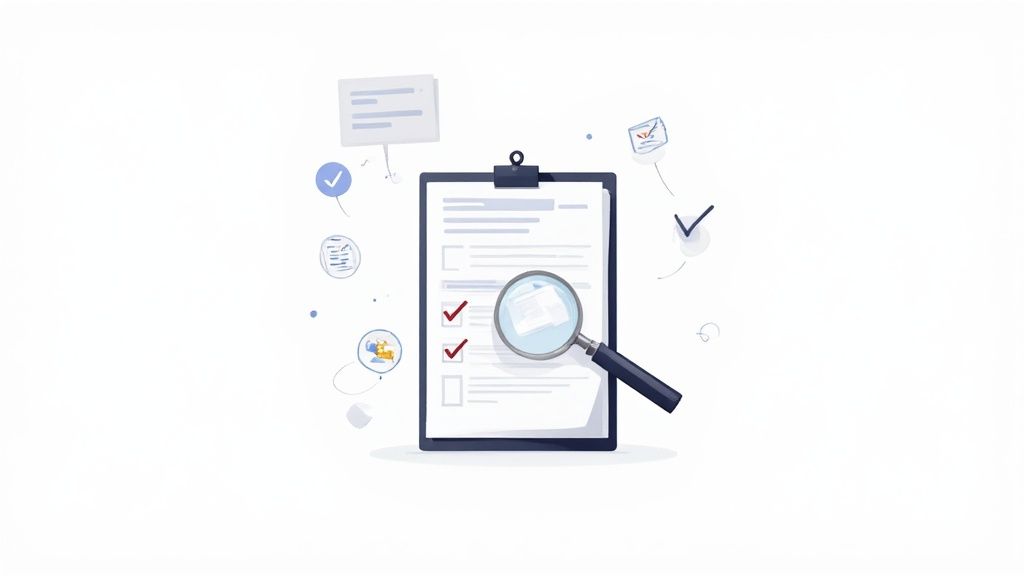
Before a single signature hits the page, the most critical part of the entire process happens: the review. Too often, teams give a contract a quick scan, eager to close the deal, only to run into trouble later. This is a costly mistake that can lock you into unfavorable terms, saddle you with unexpected obligations, and spark future disputes.
A proper review is about more than catching typos. It’s about deeply understanding the promises you’re making. The first step is to dissect the key clauses that carry the most weight. You have to know exactly what you're agreeing to, and that means paying close attention to the fine print.
Key Clauses to Scrutinize
A thorough review should always focus on several core areas of the document. Each one defines a critical piece of your relationship with the other party.
- Payment Terms: Are the payment schedules, amounts, and due dates crystal clear? What about penalties for late payments? Don't leave this open to interpretation.
- Scope of Work & Deliverables: Does the contract precisely outline the services or products being delivered? Any ambiguity here is a recipe for conflict down the road.
- Liability and Indemnification: Who is on the hook if something goes wrong? Make sure you understand the limits of liability and any clauses that require you to cover the other party's losses.
- Termination Conditions: How can the agreement be ended? Look for clauses on termination for cause (like a breach) and termination for convenience (ending it for any reason), and know the required notice periods.
- Confidentiality: What information has to be kept private, and for how long? Ensure these terms are both reasonable and achievable for your team.
A contract is a story your business tells about its future obligations. The pre-signing review is your chance to edit that story and ensure it has a successful ending. Rushing this part is like skipping the first chapter and hoping the plot makes sense later.
Proposing Changes and Managing Approvals
Once you’ve flagged areas that need tweaking, the next step is proposing changes, a process known as redlining. This is where you suggest alternative language, strike out unfavorable terms, and negotiate a middle ground. But if you're managing this back-and-forth over email, things can get chaotic fast, leading to version control nightmares.
This is where a modern workflow platform like BoloSign makes a tangible difference. Instead of juggling Word documents and confusing email chains, you can manage the entire approval sequence in one place.
Imagine a staffing agency in Australia finalizing a client agreement. The document can be automatically routed from the sales manager to the legal department and then to finance for final sign-off. BoloSign ensures everyone reviews the correct version and provides their input in a predefined order. This crushes bottlenecks and eliminates the need for manual follow-ups, preventing costly oversights before the contract ever gets sent for signature. With BoloSign, you can create, send, and sign PDFs online instantly.
To get the most out of your review, it helps to understand the foundational elements of a contract. Knowing what to look for from the very beginning is the best way to protect your interests.
Choosing Your Signing Method: Wet Ink vs. Digital Signatures
How you actually sign a contract has a massive impact on the speed, security, and strength of the deal itself. The choice between a traditional "wet ink" signature and a modern digital one isn't just about convenience—it's a strategic decision that shapes your entire workflow.
While putting pen to paper feels familiar, it’s a process loaded with logistical hurdles. Printing, scanning, mailing, and waiting can stall a critical agreement for days or even weeks. It’s a bottleneck most businesses can no longer afford.
This old-school manual process is quickly being left behind. The global electronic signature market is exploding, on track to hit USD 12.22 billion by 2025. More than 80% of organizations are already using e-signatures for routine business, and in fast-moving sectors like real estate, 70% of signatures are now completed on mobile devices. This isn't just a trend; it's a fundamental shift toward faster, more secure ways of doing business. You can explore more insights into eSignature market trends to see just how big this change has become.
The Shift to Secure Digital Workflows
The real power of a digital signing solution is that it does much more than just replace a physical signature. It builds a complete, legally sound record around the entire agreement.
Platforms like BoloSign are built from the ground up to comply with global standards like the ESIGN Act in the U.S. and eIDAS in the EU. This ensures your electronically signed documents carry the same legal weight as their paper-and-ink counterparts, but with layers of proof that paper can’t offer.
Imagine a real estate agent in the UAE closing a deal with clients based in Canada. Instead of wrestling with international couriers and time zones, they can use BoloSign to send the contract and get it securely signed online in minutes.
The system captures an encrypted, unchangeable audit trail detailing every single interaction—who opened the document, when they viewed it, and the IP address they signed from. This creates an undeniable record that is far more verifiable than a simple scribble on paper.
Comparing Your Options
When you're trying to decide what’s right for your business, it helps to put the methods side-by-side. The differences in speed, security, and cost are pretty stark.
Here’s a practical look at how traditional wet ink signatures stack up against a modern digital signature platform.
Wet Ink vs. Digital Signature: A Practical Comparison
| Feature | Wet Ink Signature | Digital Signature (with BoloSign) |
|---|---|---|
| Speed & Efficiency | Slow, manual process requiring printing, physical delivery, and scanning. | Instant. Send and sign documents in minutes from anywhere, on any device. |
| Security & Verifiability | Vulnerable to forgery, tampering, and loss. Difficult to verify authenticity without forensic analysis. | Highly secure with encryption and a comprehensive, legally admissible audit trail. |
| Cost | Involves direct costs (paper, ink, postage) and indirect costs (administrative time, delays). | Dramatically lower. BoloSign's fixed price for unlimited documents eliminates per-envelope fees, making it up to 90% more affordable than alternatives. |
| Accessibility & Storage | Physical storage is cumbersome, and documents can be easily misplaced or damaged. | Secure, centralized cloud storage makes documents instantly searchable and accessible. |
The takeaway is clear: while wet ink is familiar, its drawbacks in a modern business context are significant. Digital signatures offer a superior alternative across nearly every important metric.
Moving from wet ink to a digital signature isn't just about digitizing a signature; it's about upgrading your entire agreement process to be faster, more secure, and fully auditable.
Ultimately, choosing a modern eSignature platform like BoloSign removes friction from your most important business moments. It gives you the full legal standing of a wet signature while adding layers of security and efficiency that manual processes just can't touch. With the ability to sign PDFs online instantly, you can accelerate everything from sales contracts in professional services to patient intake forms in healthcare—all while building a stronger compliance foundation.
Executing the Signature Process Like a Pro
Actually getting a contract signed has come a long way. It used to be a simple pen-to-paper action, but now it's a sophisticated, secure, and fully auditable workflow. This is the moment the agreement becomes legally binding, and modern tools have turned what was once a logistical nightmare into a seamless digital experience.
Platforms like BoloSign are built to make this final step foolproof. You can instantly upload a PDF or use a pre-built template, drag and drop signature fields exactly where you need them, and even define a specific signing order for multiple people. That level of control is crucial in complex deals.
Imagine a professional services firm in the US finalizing a major project agreement. They can set up a sequential workflow where the contract first goes to the client for their signature. Once signed, it automatically routes to the firm’s CEO for the final sign-off. Each person gets a secure, unique link to sign from any device, which cuts out the delays and the need for constant manual follow-ups.
This flowchart really drives home the difference between the slow, outdated wet ink process and the efficient digital workflow that modern businesses now depend on.

The visual contrast is stark. A digital signing solution removes multiple manual steps, dramatically shrinking the time and risk involved in getting an agreement over the line.
The Power of an Unbreakable Audit Trail
What truly separates a modern digital signing solution from a simple scanned signature is the audit trail. This is your digital proof—the comprehensive, court-admissible log of every single action taken on that document.
BoloSign automatically captures this critical data, creating a robust legal record that includes:
- Who signed: Verifying the identity of each person.
- When they signed: Recording the exact date and timestamp for every signature.
- Where they signed from: Capturing the IP address as another layer of verification.
- Document history: Logging every view, signature, and completion event.
This detailed trail isn't a nice-to-have; it's non-negotiable in highly regulated industries. In healthcare, for instance, patient consent forms and business associate agreements have to meet strict HIPAA compliance standards. The audit trail from BoloSign delivers the hard proof that these sensitive documents were handled securely and signed by the right people at the right time.
An electronic signature is more than just an image on a PDF; it's a secure, time-stamped event backed by a detailed audit trail that confirms its authenticity and legal standing.
This approach offers a level of security and verifiability that traditional methods simply can't touch. To get into the weeds on this, check out our complete guide on how to electronically sign a document with full legal confidence.
Post-Signature Management That Protects Your Business
The signature is just the beginning.
Too often, businesses treat a signed contract like a finished task. The document gets filed away, and everyone moves on. But what happens next is where real value is either protected or lost, often leading to missed renewals, compliance breaches, and surprise costs.
Without a solid post-signature game plan, your signed agreements become static, forgotten files collecting dust in a shared drive or, worse, a filing cabinet. This isn't just disorganized—it's a massive risk. The average company sees 8.6% value erosion from a contract after it's signed. For companies with messy processes, that number can balloon past 20% due to fragmented data and human error.
This is the moment you shift from simply getting a document signed to actively managing your commitments. It’s how you turn a potential liability into a strategic asset.
Turning Static Documents into Active Assets
Modern contract automation completely changes how you handle agreements after the ink is dry. Forget about relying on manual calendar reminders and messy spreadsheets. Instead, you can use smart technology to stay ahead of every single deadline and obligation.
BoloSign’s AI-powered contract intelligence breathes life into your agreements. The system automatically scans signed contracts, pulls out the critical information, and transforms it into actionable alerts and insights.
This includes:
- Key Dates: Automatically flagging renewal deadlines, termination notice periods, and expiration dates so nothing slips through the cracks.
- Obligations & Deliverables: Pinpointing key responsibilities for all parties involved, ensuring everyone delivers on their promises.
- Automated Reminders: Setting up proactive alerts that give your team a heads-up on what's coming, well in advance.
Imagine a logistics company in New Zealand juggling hundreds of carrier agreements. Instead of manually tracking everything, BoloSign’s platform can monitor compliance terms, flag renewal dates, and track rate changes automatically. A portfolio of static PDFs instantly becomes a dynamic tool for cutting costs and managing risk.
A signed contract is a living commitment, not a historical record. Effective post-signature management ensures it delivers on its intended value throughout its entire lifecycle.
Secure Storage and Compliance You Can Trust
Proper storage is the bedrock of post-signature management. A secure, centralized repository isn't just a "nice-to-have"—it's non-negotiable for protecting sensitive information and staying compliant with data privacy laws like GDPR and HIPAA.
With BoloSign, every executed contract is stored in a secure, cloud-based environment. This simple step eliminates the risk of lost documents and creates a single source of truth for your entire organization. You can control who sees what, track the document's history, and pull up any agreement in seconds—a critical capability during an audit or dispute.
You can learn more about setting up your own system in our guide to contract repository management.
Ultimately, a strong post-signature process is about more than just storage. It’s about building a foundation for a successful, long-term relationship. To ensure a smooth handoff and mitigate risks after the deal is done, this ultimate 8-step client onboarding checklist offers some fantastic practical guidance.
BoloSign makes it simple to manage your agreements with confidence, ensuring every contract delivers its full value long after the initial signature.
Common Pitfalls When Signing a Contract and How to Avoid Them
Even with the best of intentions, the path from a handshake deal to a legally sound signature is loaded with traps. These missteps can quickly turn a promising agreement into a costly dispute, and they almost always stem from rushed timelines and a lack of a clear, organized workflow.
One of the most common mistakes is the failure to get every verbal agreement and negotiated change into the final written document. A friendly confirmation over the phone or a quick "sounds good" in an email means very little if those terms aren't explicitly spelled out in the contract you actually sign. That gap between discussion and documentation is where future conflicts are born.
Another classic blunder? Not keeping a fully executed copy that everyone can access. Once the ink is dry, it's dangerously easy for the final version to get buried in someone's inbox or saved to a local drive. This creates instant confusion and arguments over which version is the real "source of truth."
Solving Pitfalls with Smart Workflow Automation
The good news is that you can solve most of these problems before they ever happen by using a dedicated platform for contract automation. Instead of relying on manual checklists and hoping nobody forgets a step, you can build safeguards directly into your signing process.
Here’s how BoloSign helps in the real world:
- Misunderstanding Key Clauses: Let’s be honest, not everyone is a lawyer. Our platform's AI contract review can automatically flag ambiguous or non-standard language, ensuring your team fully understands their obligations before they commit. This is a lifesaver for complex agreements in fields like professional services or logistics, where a single confusing clause can have huge financial implications.
- Failing to Get Proper Approvals: A disorganized approval chain is a recipe for disaster. BoloSign's structured, automated workflow ensures the contract is routed to the right stakeholders—legal, finance, and management—in the correct order, every single time. No shortcuts, no mistakes.
- Losing Track of the Final Version: A centralized system like BoloSign acts as a secure, single source of truth. Once signed, the final, legally binding document is locked and stored where all authorized parties can find it. This completely eliminates the chaos of version control.
Relying on manual processes to avoid contract pitfalls is like navigating a minefield with a blindfold. A smart digital signing solution clears the path by building safety and clarity into every step.
By adopting a digital signing solution, you transform what was a series of risks into a secure, transparent, and fully auditable workflow. For example, when a healthcare provider in the US uses BoloSign to send patient intake forms, the workflow is designed to be HIPAA-compliant from the start. The signatures are verifiable, and the final document is stored securely. This process inherently prevents many common errors, turning potential pitfalls into well-managed checkpoints.
Streamline Your Entire Contract Workflow Today
Let's be honest, the old way of signing contracts is broken. Juggling emails, printing PDFs, and chasing down approvals is slow, risky, and a massive time drain. The single most effective way to fix this is to move from scattered manual steps to one unified, automated system.
This is where you bring the entire journey—from the first draft to the final signature and beyond—into a single, secure, and transparent workflow. It’s exactly what we built BoloSign to do.
You can create, send, and manage an unlimited number of documents, templates, and forms with unlimited team members, all for one fixed price. It’s a straightforward model that makes our platform up to 90% more affordable than alternatives like DocuSign or PandaDoc. This puts powerful tools like AI-powered contract automation and intelligence in your hands, no matter the size of your organization.
From Creation to Completion in One Place
Think about a professional services firm bringing on a new client. Instead of a messy email chain and switching between different apps, they can draft the agreement, send it out for an eSignature, and track post-signature tasks all inside BoloSign. The same goes for an educational institution processing thousands of enrollment forms or a logistics company managing complex vendor agreements.
BoloSign transforms your contract process from a series of disconnected, risky steps into a single, seamless workflow. It's about moving faster with more control and less cost.
To get even more out of your new workflow, it's worth understanding the core principles of AI Workflow Automation for Your Business. By integrating smart automation, you can eliminate bottlenecks and focus on what actually grows your business.
The ability to create templates in minutes, sign PDFs instantly, and rely on built-in compliance (ESIGN, eIDAS, HIPAA, GDPR) gives you a system that scales with you.
Ready to see how effortless your contract workflow can be?
Experience the difference firsthand. Start your free 7-day trial of BoloSign today and see how simple, affordable, and secure your contract management can become.
A Few Common Questions About Signing Contracts
People often have the same handful of questions when it comes to signing agreements, especially online. Let's clear up a few of the most common ones.
Is An Electronic Signature Actually Legally Binding?
Yes, absolutely. An electronic signature is legally recognized and binding in most developed countries around the world, including the US, Canada, Australia, New Zealand, and the UAE. Major regulations like the ESIGN Act in the U.S. and eIDAS in Europe provide the legal backbone for their use.
The key is proof. This is why platforms like BoloSign are so critical—they provide a complete, court-admissible audit trail with timestamps and IP addresses, confirming who signed, when they signed, and that the document hasn't been tampered with since. This level of compliance ensures your agreements are enforceable.
What Is The Most Secure Way To Sign A Contract Online?
Hands down, the most secure method for signing a contract online is using a reputable digital signing solution. Sending a scanned PDF back and forth over email just doesn't cut it anymore; it lacks a verifiable audit trail and is easy to forge.
Dedicated platforms use advanced encryption, secure access links, and those all-important detailed audit trails to protect the document's integrity and verify each signer's identity. It’s a night-and-day difference in terms of security and enforceability.
Can I Sign A Contract For Someone Else?
You can only sign for someone else if you have been given explicit legal authority to do so. This is usually documented through a Power of Attorney or if you're a designated officer of a company with the authority to bind the corporation.
Signing on behalf of someone without proper authorization is a serious misstep. It can immediately invalidate the contract and may even lead to significant legal trouble.
Ready to move contracts forward with confidence and speed? The best way to understand the power of BoloSign's AI contract automation is to see it in action. Start your free 7-day trial today and experience the future of contract management firsthand.

Paresh Deshmukh
Co-Founder, BoloForms
27 Dec, 2025
Take a Look at Our Featured Articles
These articles will guide you on how to simplify office work, boost your efficiency, and concentrate on expanding your business.